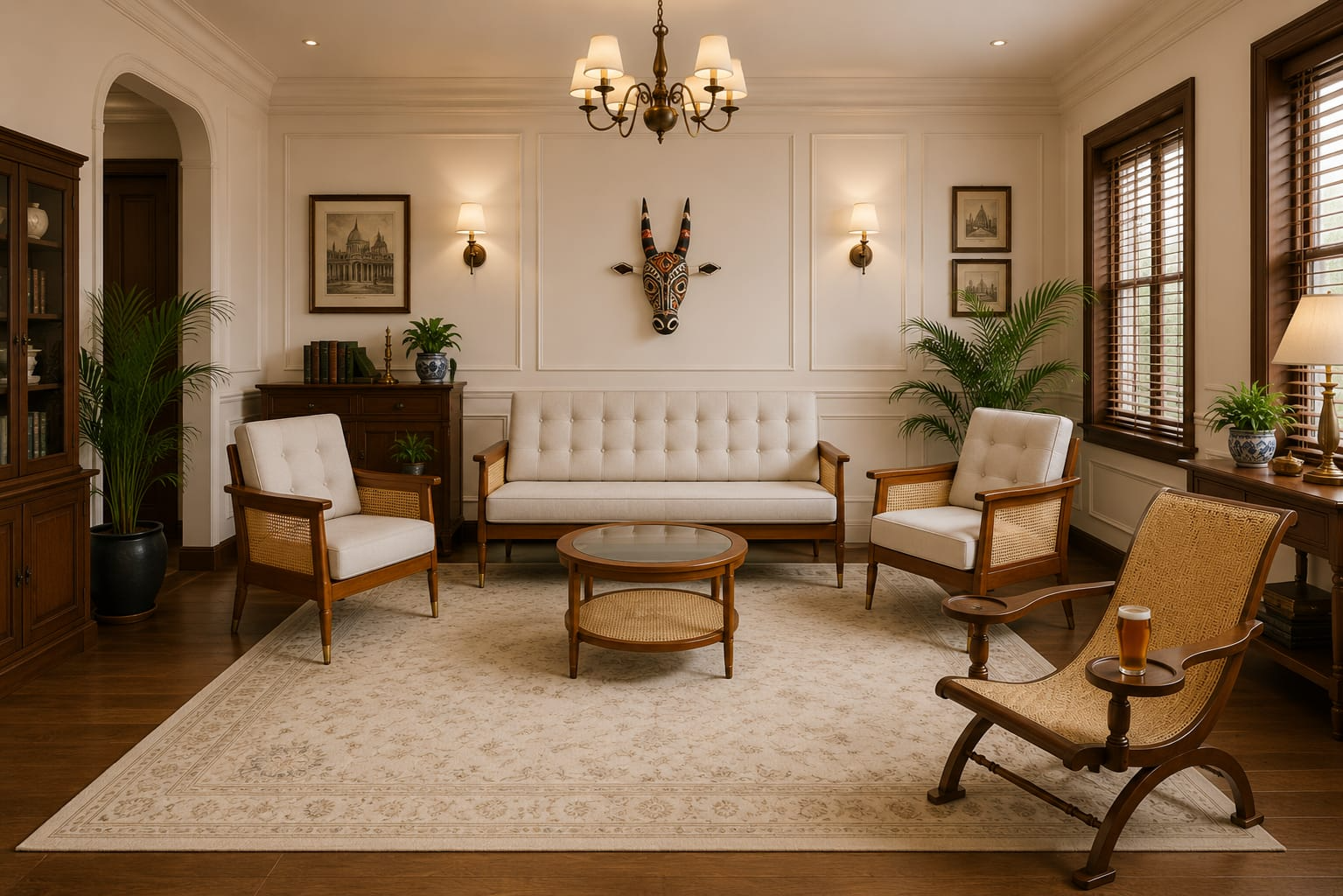
Three generations.
One house.
Leen's began in 1949 as a small dealership of period furniture, on a quiet side-street in Trivandrum, run by Leen Mathew with his brother. The brief, even then, was the same: solid pieces, honest lineage, and the patience to wait for the right buyer. No auction fever, no fashion. Objects chosen for what they were, not what they might fetch.
In the decades that followed, the house expanded its reach without expanding its manner. International clients arrived — drawn first by reputation, then by the catalogue. A rosewood davenport would travel to London; a pair of brass oil lamps to New York. The correspondence was careful, the packing meticulous. We have always believed that an object in transit is still in our custody.
Today the showroom is in the same family, on the same street. Our ledgers go back to 1949 in unbroken sequence. Every object passes the family eye before it passes anyone else's — and every piece that leaves our hands leaves with its full history attached. That has not changed. We do not expect it to.
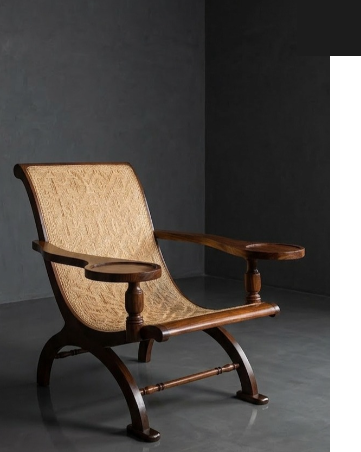
The restoration process.
Assessment
Each piece arrives at the workshop before the showroom. Condition, origin, and structure are documented photographically and in writing before any work begins.
Conservation
Surfaces are stabilised, not stripped. Original patina, finish, and hardware are preserved wherever structurally sound. The patina is part of the piece.
Restoration
Where structural intervention is required, we work in the same materials and methods as the original maker — no substitutes, no shortcuts, no anachronisms.
Documentation
A full written record accompanies every piece: materials used, work performed, and the reasoning behind each decision. The ledger travels with the object.
The house behind the house.
Leen Mathew
David Mathew
Sarah Mathew

Every piece tells a story.
Two catalogues. One discipline. Browse what the house holds, or write to us directly.